
How the world is built · 01
The 2.5 million rivets of the Eiffel Tower
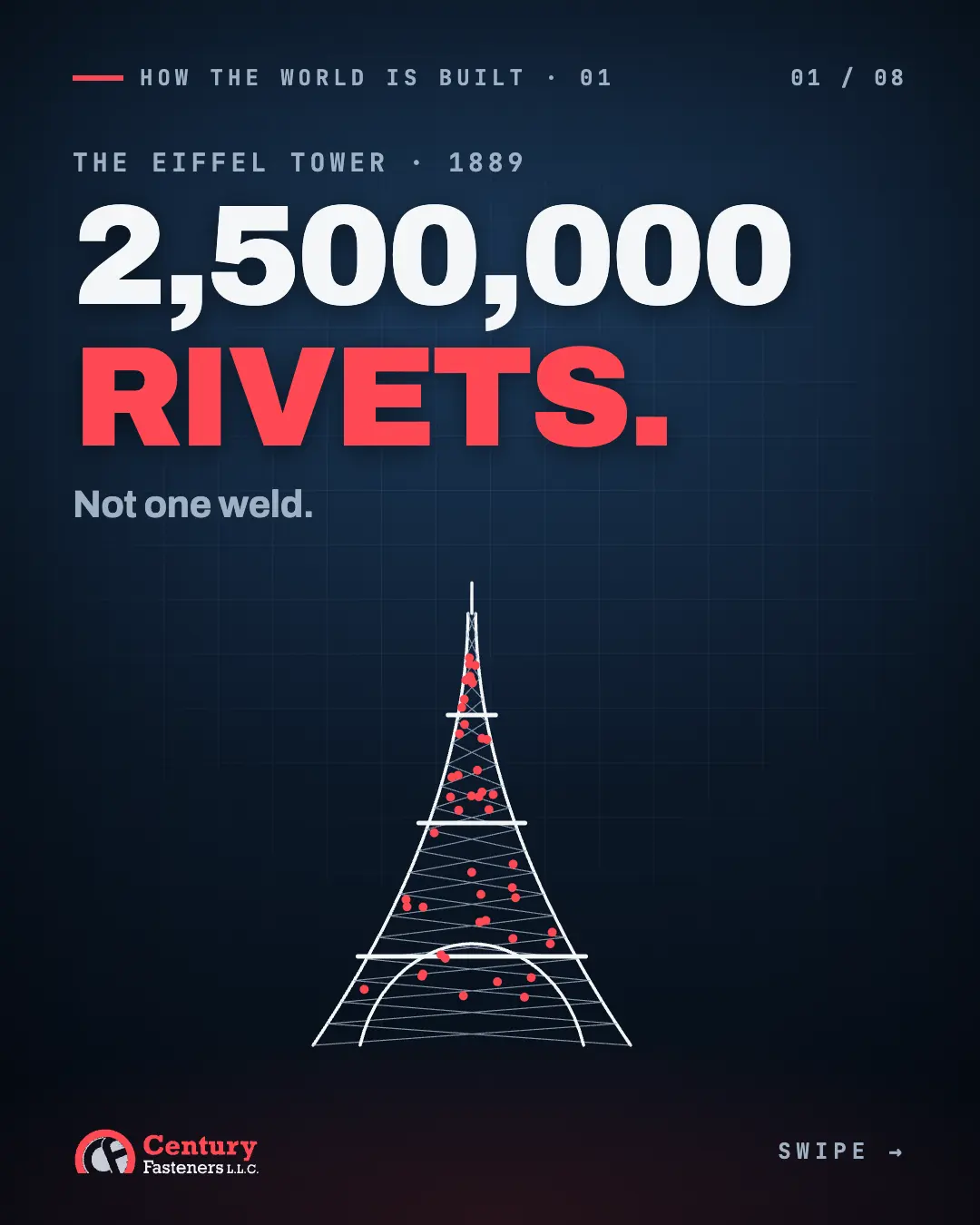
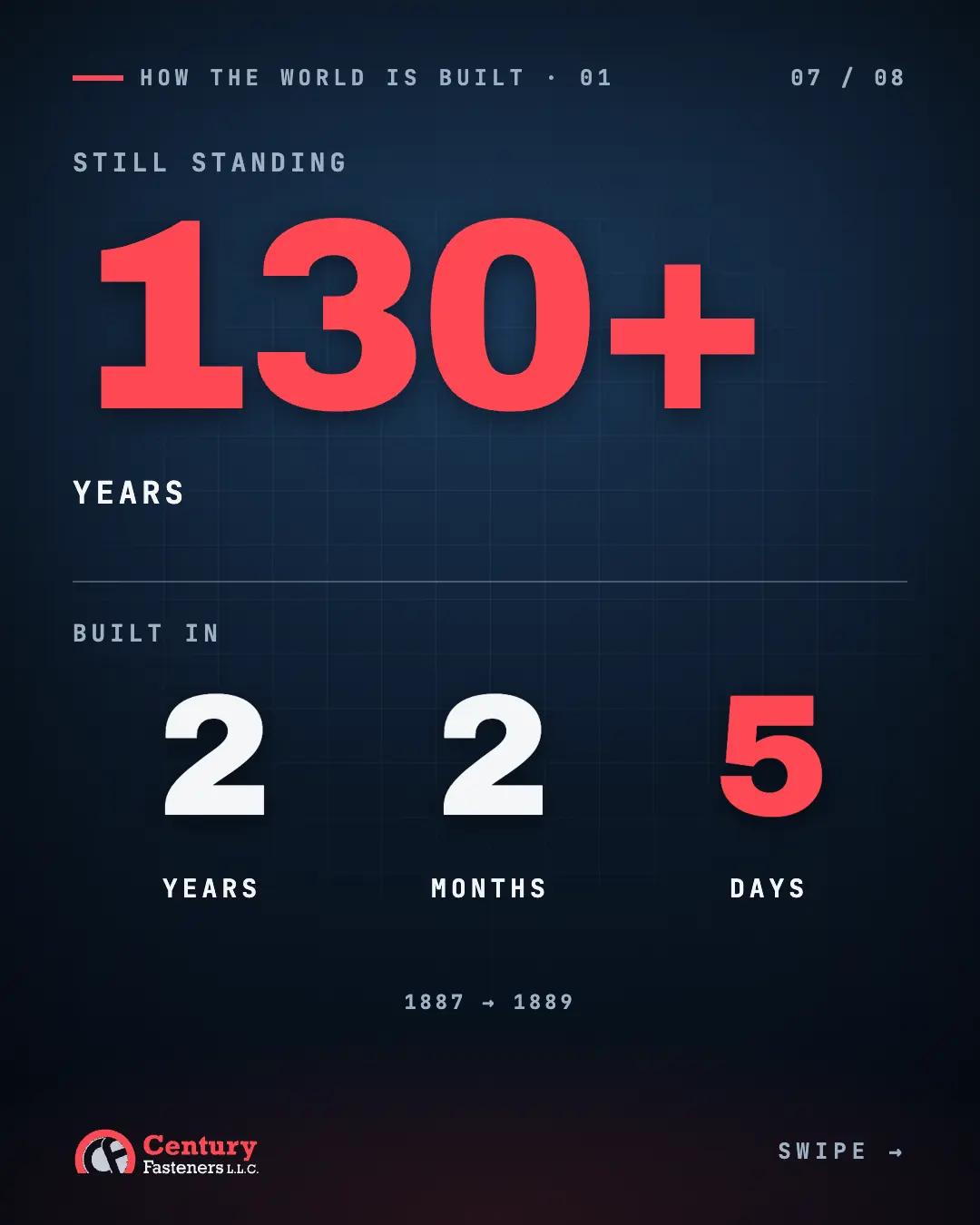
Nothing on the Eiffel Tower was welded. About 2.5 million hot rivets hold it together, and the way they tightened themselves is the clever part.
- ≈2.5Mrivets
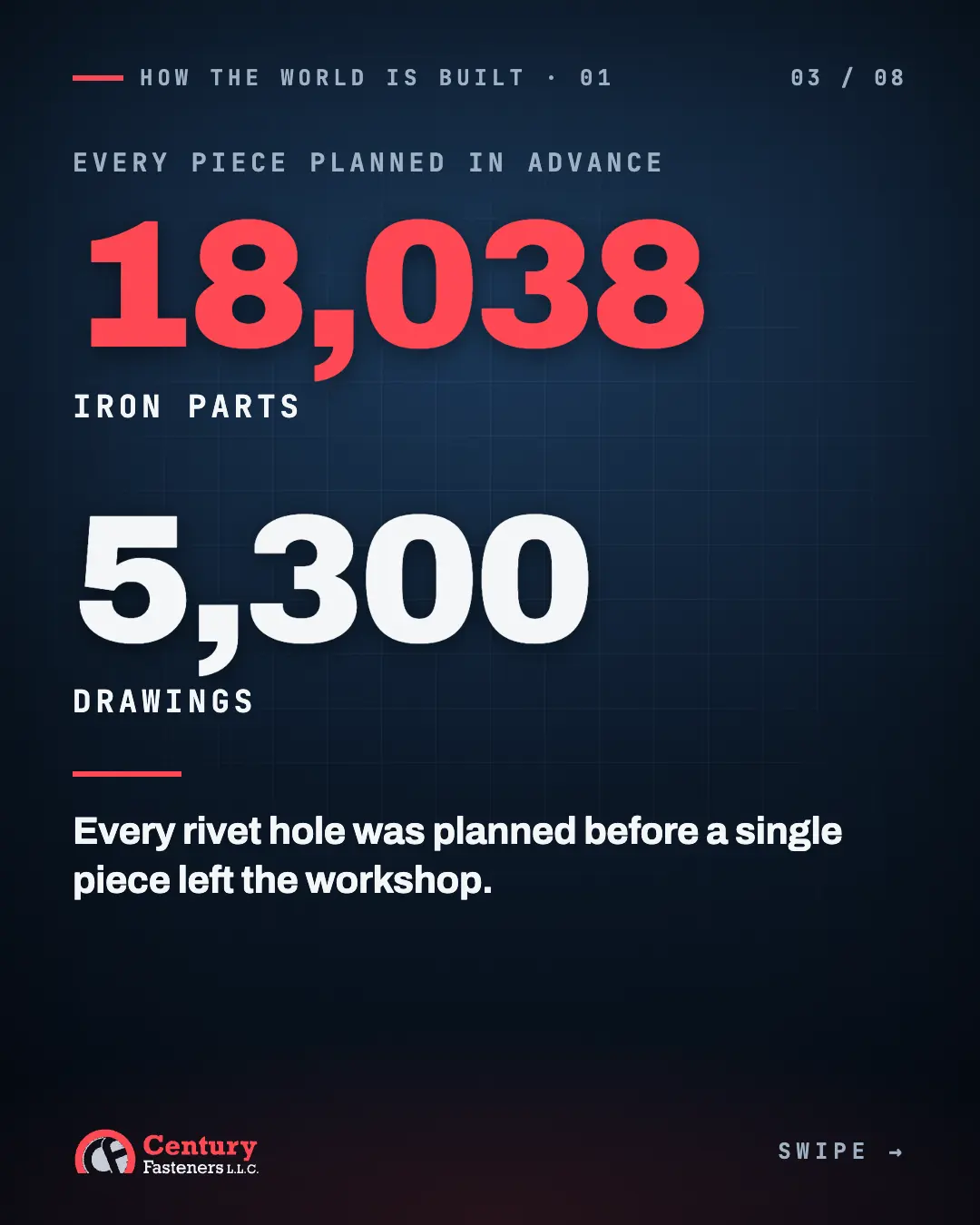
- 18,038iron parts
- 5,300workshop drawings
- 2 yearsand 2 months to build: 26 Jan 1887 to 31 Mar 1889
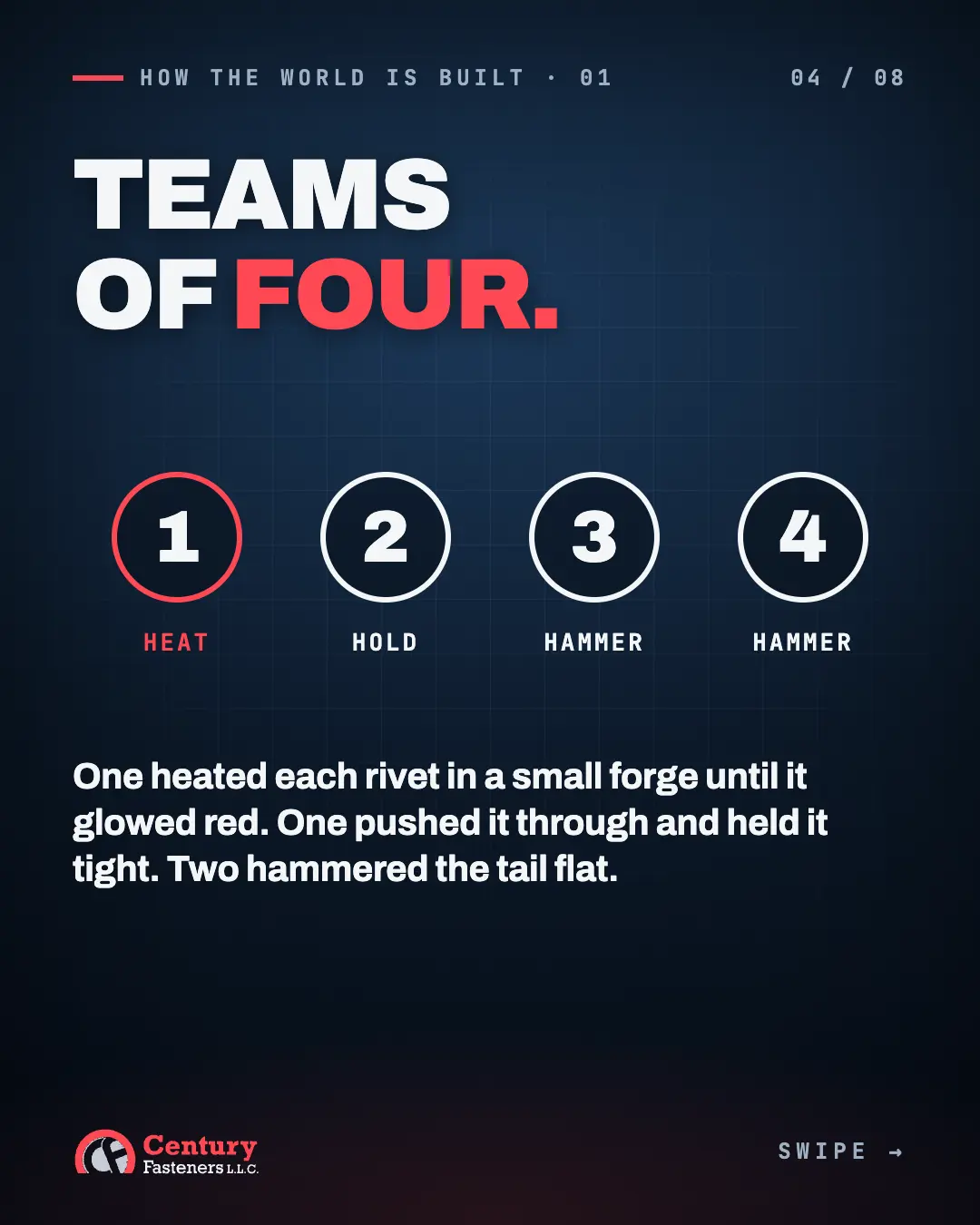
- 4people per riveting team
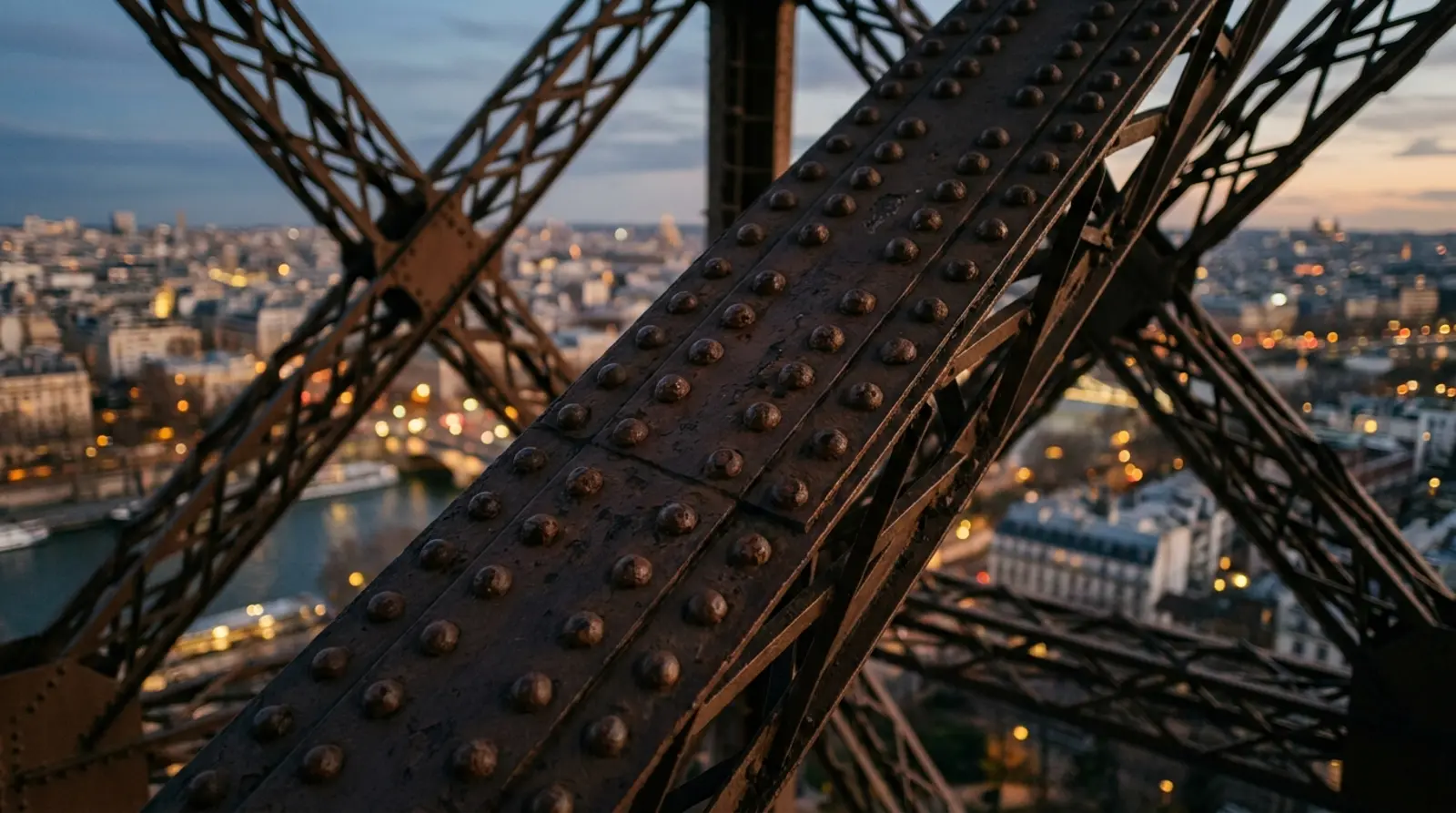
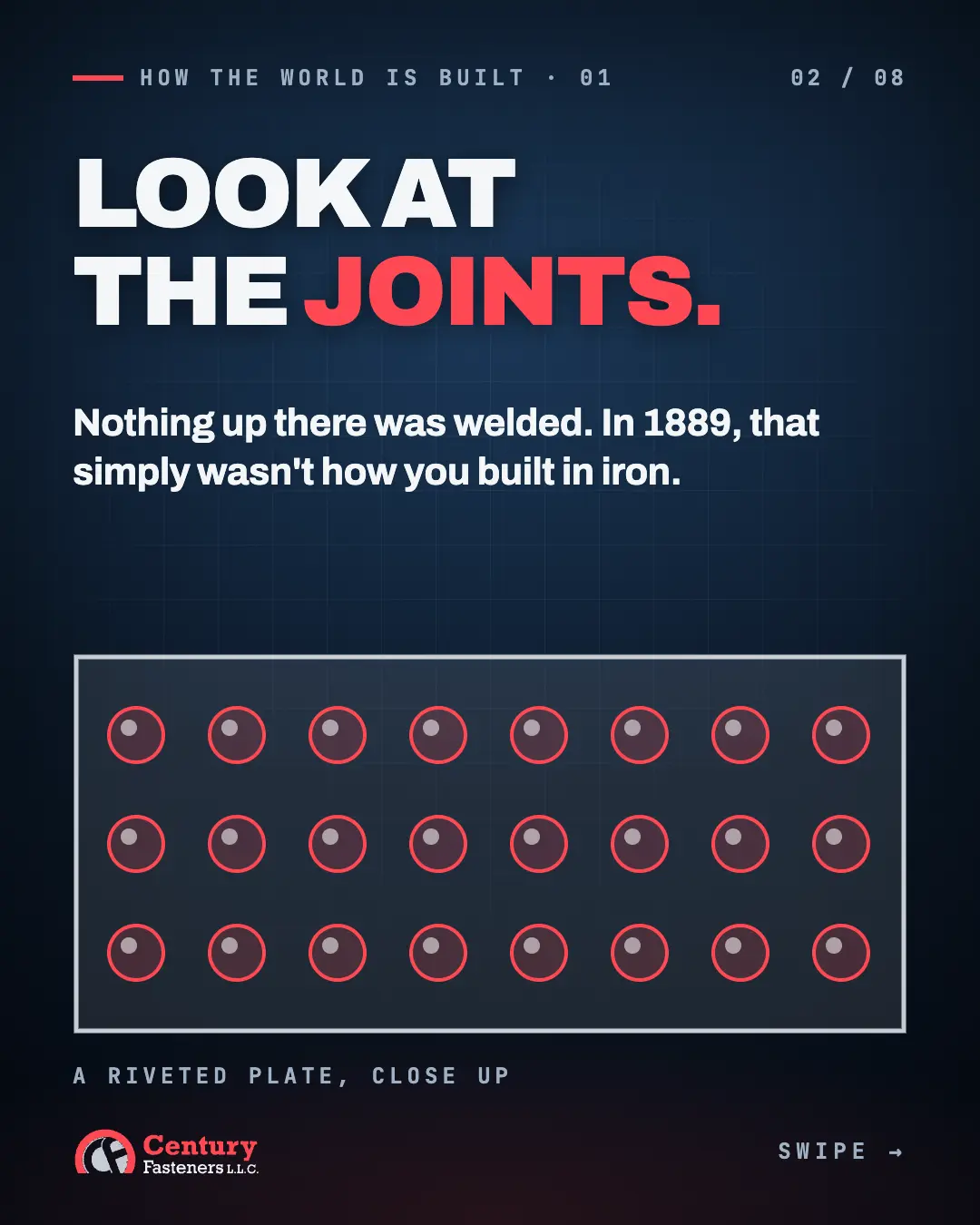
Look closely at the Eiffel Tower. Not at the shape, at the joints. Nothing up there was welded. In 1889, that simply was not how you built in iron.
Planned before it left the workshop
The tower is 18,038 iron parts, drawn on 5,300 workshop drawings. Every rivet hole was planned before a single piece left the workshop, so the parts arrived on site ready to be joined.
A team of four, one hot rivet
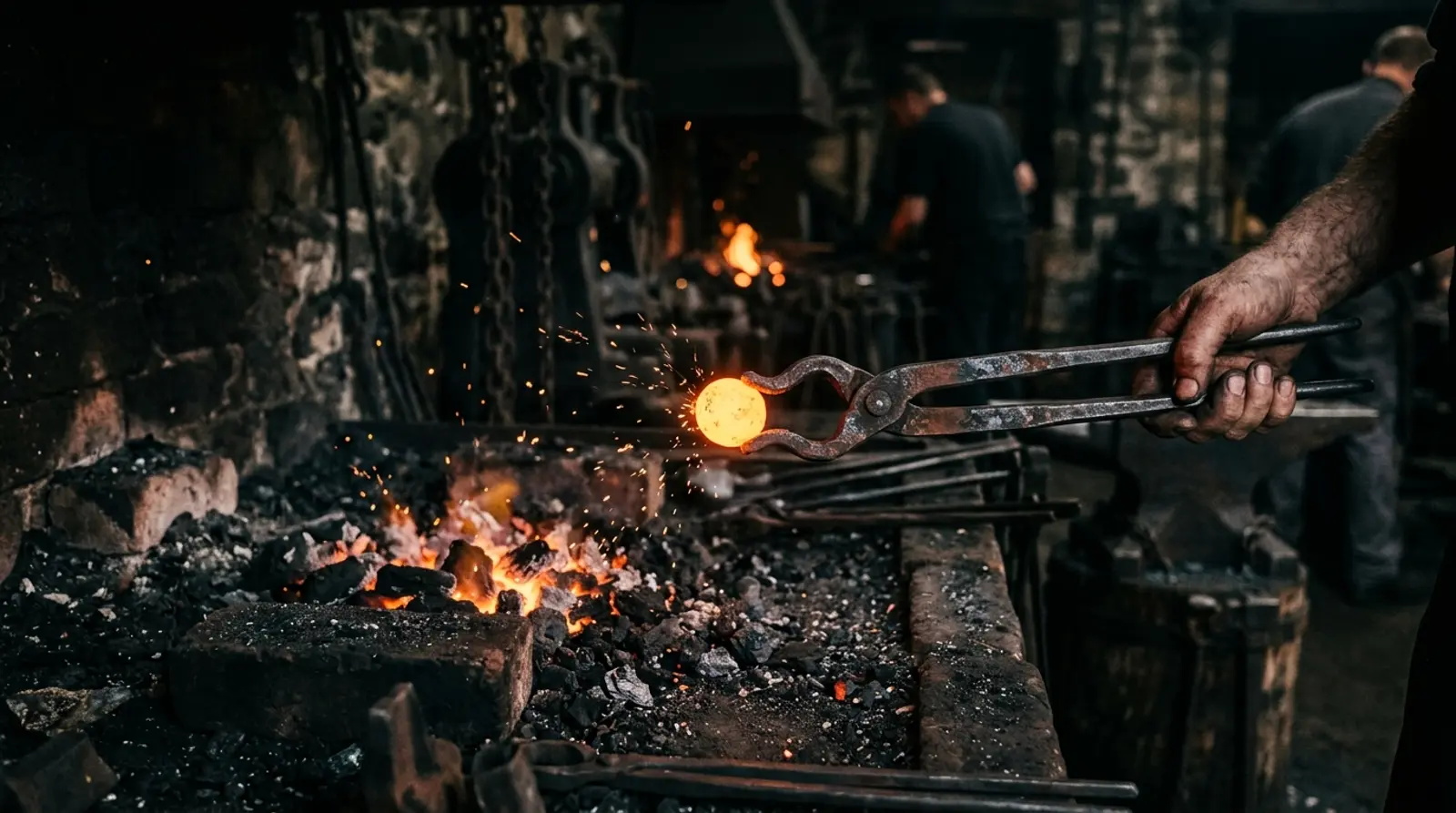
Riveting was done in teams of four. One person heated each rivet in a small forge until it glowed red. One pushed it through the hole and held it tight. The others hammered the tail flat into a second head.
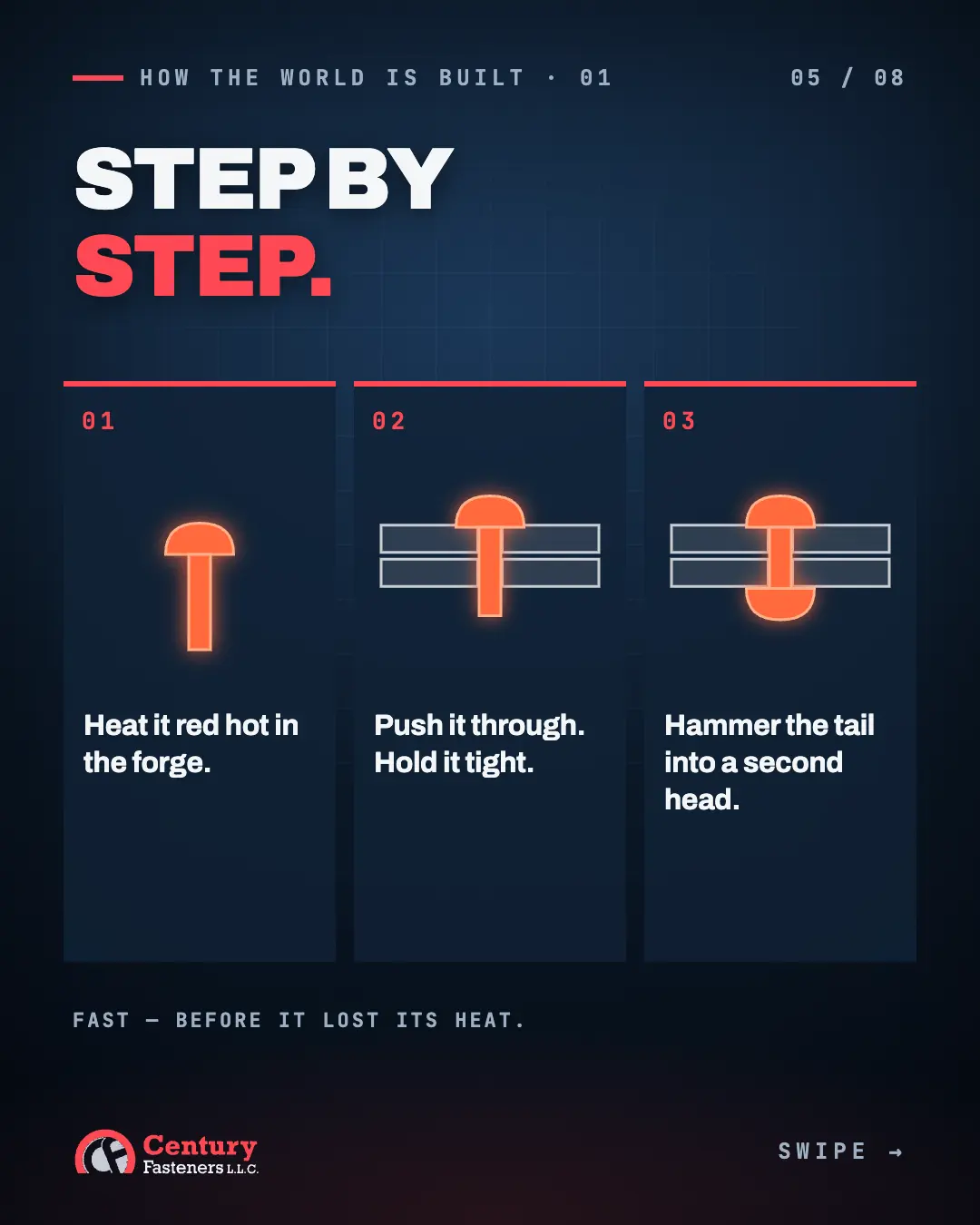
How one rivet went in
- Heat itRed hot, in the forge.
- Push it throughThrough the aligned holes, and hold it tight.
- Form the second headHammer the tail flat into a head of its own.
- Be quickAll of it before the rivet lost its heat.
The clever part: it tightened itself
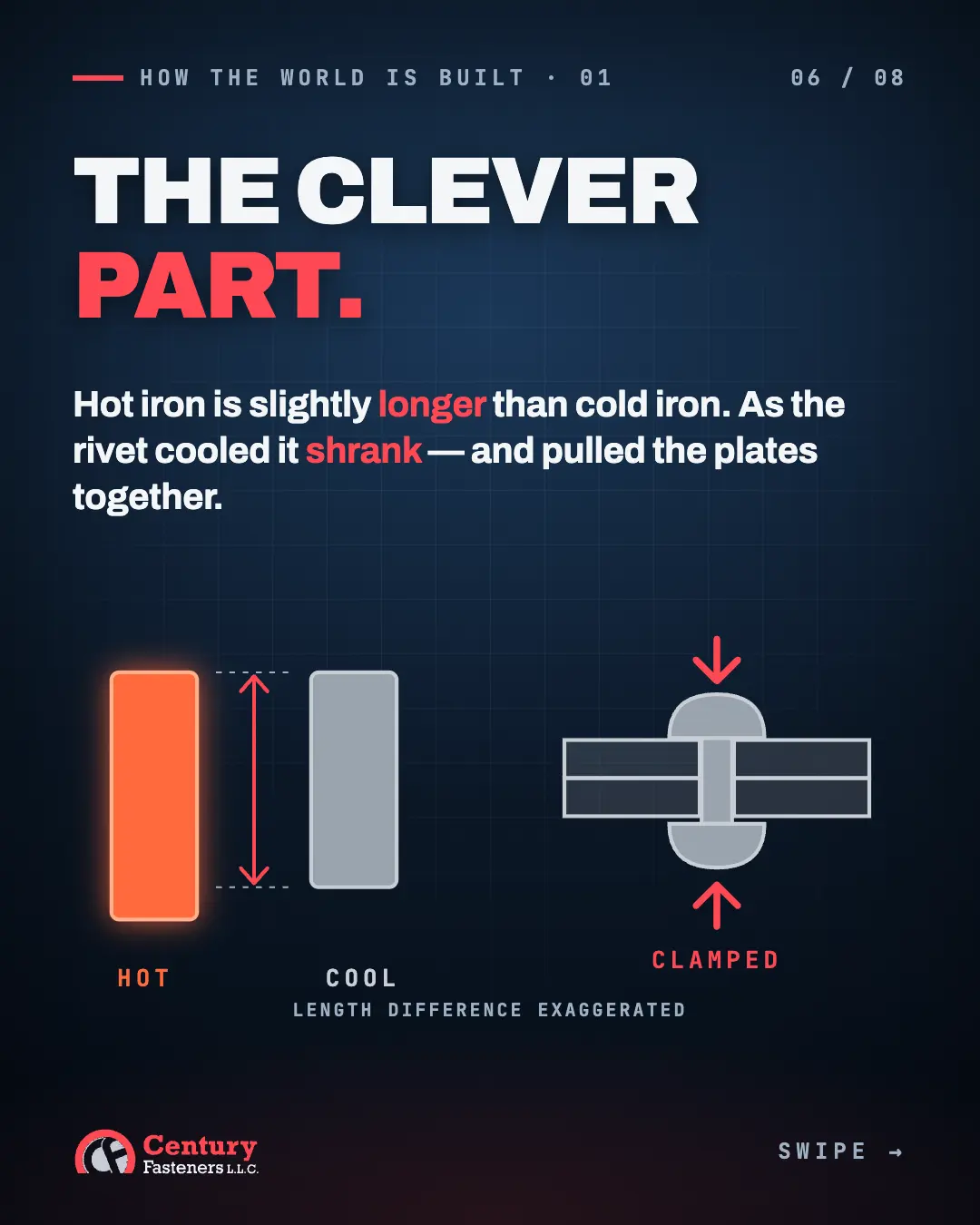
Hot iron is slightly longer than cold iron. As each rivet cooled it shrank, and pulled the plates together with a grip no one could tighten by hand. Drag the slider to watch it happen.
Hot: just hammered, plates not yet clamped
The Instagram carousel
So why did we stop building like this?
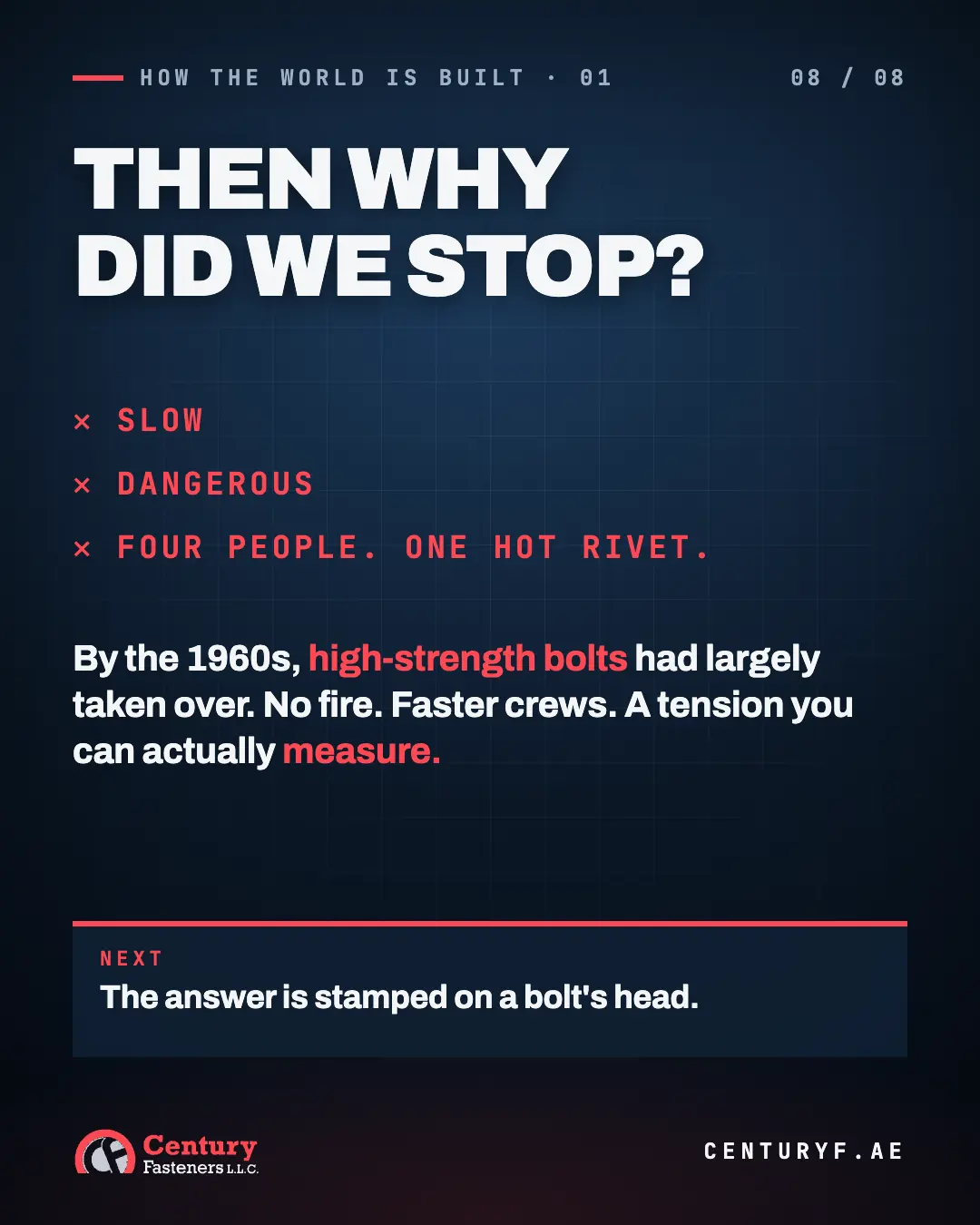
Riveting was slow and dangerous, and every joint depended on four people and one hot rivet. From the 1950s, high-strength bolts and welding took over new steel building. No fire, faster crews, and a tension you can actually measure.
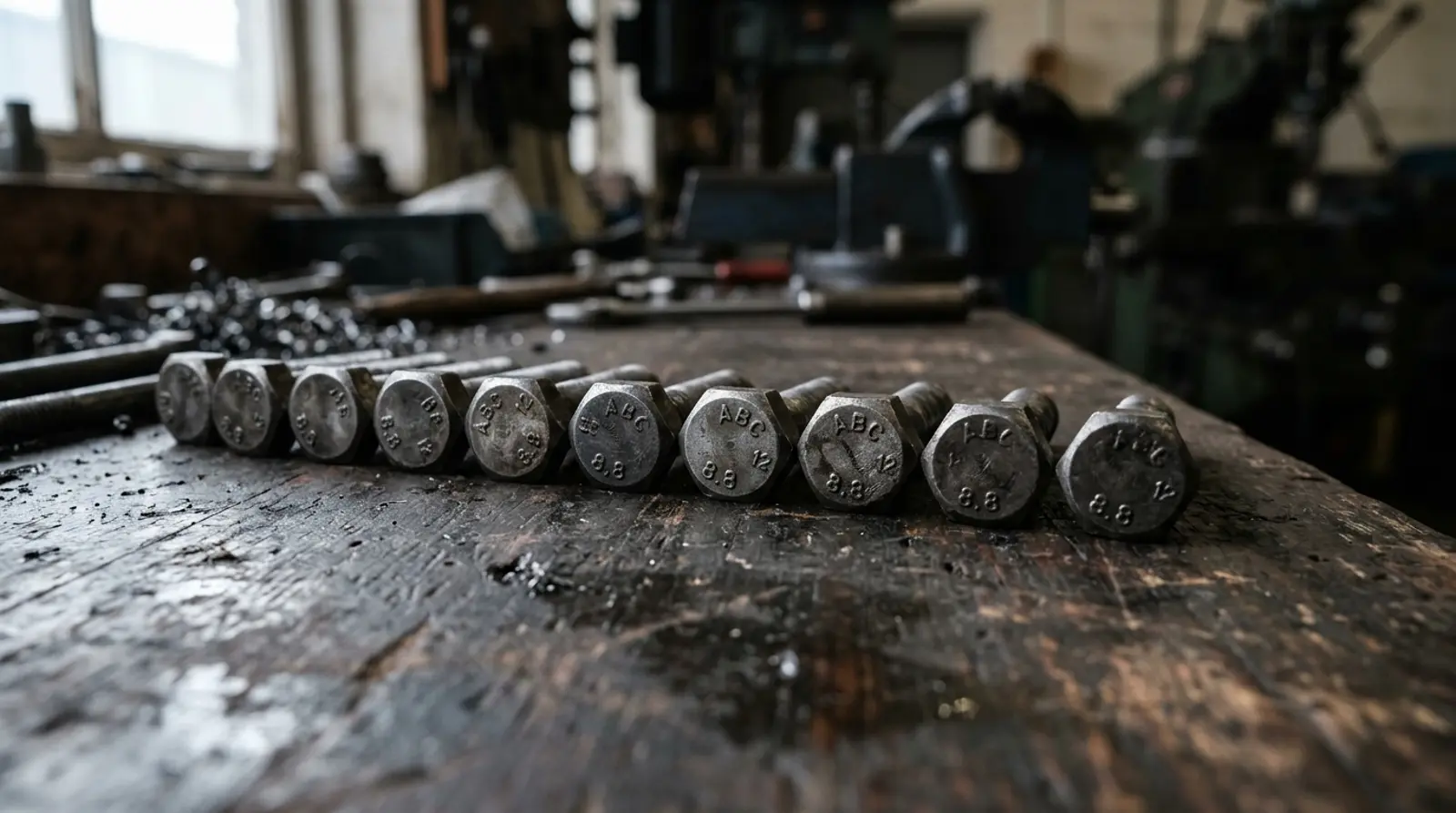
The answer to what replaced the rivet is stamped on the head of every bolt. Next: what the numbers on a bolt's head mean.
Need the modern version?
Today the job is done by bolts and nuts matched in strength class. Tell us what you are fixing and we will quote the right ones from Dubai stock.
Sources
- Eiffel Tower official history page: parts, drawings, rivet count, riveting teams, build dates
- Structural bolting history: the 1951 US specification approving A325 bolts as replacements for rivets